
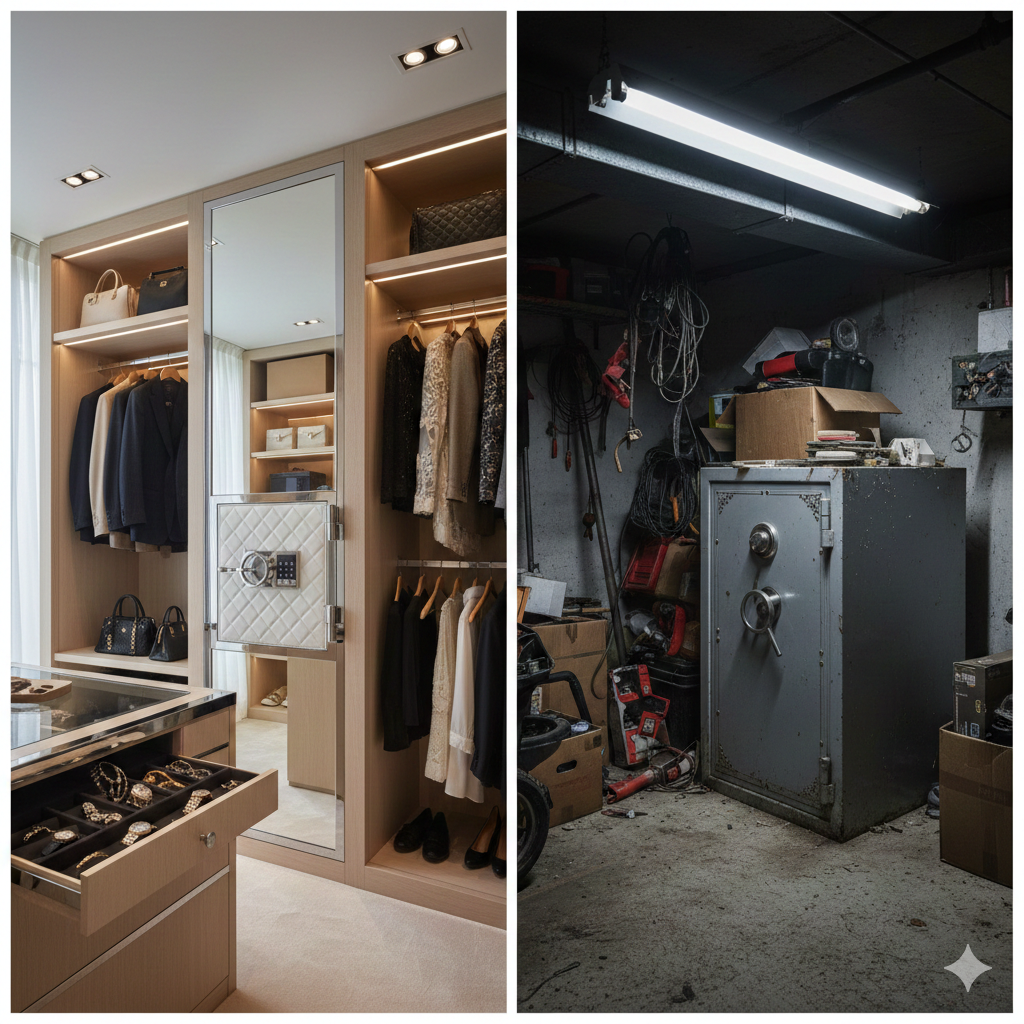

According to our research, over 67% of luxury homeowners chose smart safes in 2025, and this number is projected to grow to 78% in 2026. But what's driving this massive shift? Let's dive deep into the 5 key differences between smart safes and traditional safes.
Difference #1: Access Methods - The Convenience Revolution
📱📱mart Safes: Multiple Unlocking Options
Modern smart safes offer unprecedented access flexibility:
Four Primary Unlocking Methods:

-
Biometric fingerprint scanning: 0.5-second recognition, supports multiple user registration
-
Digital keypad: Set temporary codes for family members or service personnel
-
Mechanical key backup: Reliable access during power outages
-
Mobile app remote control: Monitor and control from anywhere via smartphone
"I can quickly grab my watch while preparing for dinner without remembering complex combination sequences." — Samantha L, Valinirt User
🔐 🔐aditional Safes: Single and Cumbersome
Traditional safes typically offer only one or two access methods:
Common Issues:
-
Mechanical dial combinations: Require precise rotation sequences, easy to forget
-
Single key systems: Lost keys mean expensive locksmith fees
-
No backup options: Once you forget the combination or lose the key, access becomes nearly impossible
Real Impact: Average access time takes 30-60 seconds, potentially longer in emergencies.
Difference #2: Security - Technology-Driven Protection Upgrade
🛡 S🛡t Safes: Multi-Layer Security Protection
Smart safes use advanced technology to provide comprehensive protection:
Physical Security Enhancement:

-
75mm+ steel door thickness: Resists professional crowbar attacks for over 30 minutes
-
Anti-drill steel plates: Protects lock mechanisms from drilling attacks
-
Automatic re-locking: Locks automatically for 30 minutes after 3 failed attempts
Intelligent Security Features:
-
Intrusion alert system: Sends mobile notifications for suspicious activity
-
Usage logging: Detailed records of every access attempt with timestamps
-
Remote locking capability: Lock the safe remotely if suspicious activity is detected
⚠ Tra⚠tional Safes: Basic Protection Limitations
Traditional safes have significant security shortcomings:
Main Weaknesses:
-
Standard steel thickness: Usually only 10-20mm, easily breached by professional tools
-
No intelligent monitoring: Cannot detect or report intrusion attempts
-
Static security: Once compromised, there's no subsequent protection
Real Case: According to FBI data, traditional safes average 8-15 minutes to breach in professional theft scenarios, while premium smart safes extend this to over 45 minutes.
Difference #3: Environmental Protection - Beyond Basic Security
🌡 Smar🌡afes: Comprehensive Environmental Protection
Modern smart safes provide multi-layered environmental protection:
Fire Protection:

-
High-temperature resistance: Protects contents for over 60 minutes at 1,200°F (649°C)
-
Sealed door frames: Prevents smoke and harmful gases from entering
-
Internal temperature monitoring: Real-time monitoring with abnormal temperature alerts
Water Protection:
-
Water-tight seals: Protects internal items during fire sprinkler activation
-
Humidity control systems: Maintains optimal internal humidity to protect jewelry and documents
Additional Protection:
-
Earthquake-resistant design: Maintains structural integrity during natural disasters
-
EMP protection: Shields electronic devices from electromagnetic pulse attacks
🚒 Tradit🚒nal Safes: Limited Environmental Protection
Most traditional safes perform poorly in environmental protection:
Common Defects:
-
No fire certification: Many models lack even basic fire protection
-
Ventilation design: May allow moisture entry, damaging precious items
-
No environmental monitoring: Cannot warn of potential environmental threats
Difference #4: User Experience - From Burden to Enjoyment
✨ Smart S✨fes: Seamless Life Integration
Smart safes are designed to enhance rather than interfere with your lifestyle:
User-Centric Design:

-
Furniture-grade appearance: White leather, wood veneer finishes that perfectly blend with modern interiors
-
Silent operation: Motor-driven smooth opening/closing without noise disturbance
-
Internal lighting: LED lights automatically illuminate for nighttime use
Smart Integration Features:
-
Smart home compatibility: Integrates with Alexa, Google Home, and other platforms
-
Battery life monitoring: Advanced notification for low battery levels
-
Automatic firmware updates: Continuous new features and security patches
😣 Traditi😣al Safes: Functional Compromises
Traditional safes often sacrifice user experience for basic functionality:
Usage Pain Points:
-
Industrial appearance: Obtrusive metal appearance that disrupts home aesthetics
-
Mechanical noise: Clicking sounds during unlocking may disturb family members
-
No lighting system: Difficult to find needed items in the dark
Psychological Impact: Many users report that traditional safes make them feel "like they're in a bank vault," lacking the warmth of home.
Difference #5: Long-Term Value - Investment Return Analysis
💰 Smart Sa💰s: High ROI Long-Term Investment
While initial costs are higher, smart safes provide significant long-term value:
Direct Value:
-
Insurance discounts: Many insurers offer premium discounts (average 15-25%) for smart safes
-
Asset protection: Reduces losses from theft or fire damage
-
Brand retention value: Premium smart safes maintain better resale value
Indirect Value:
-
Time savings: Cumulative time value saved from quick access
-
Peace of mind: 24/7 security monitoring provides psychological comfort
-
Technology upgrades: Software updates extend useful life through new features
📉 Tradition📉 Safes: Short-Term Savings, Long-Term Costs
Traditional safes appear cheap but have hidden costs:
Hidden Costs:
-
Replacement frequency: Technology becomes obsolete quickly, requiring replacement every 5-7 years
-
Repair expenses: Mechanical failures incur expensive repair costs
-
Opportunity cost: Miss out on smart home ecosystem convenience
Investment Return Rate Comparison:

| Item |
|
|
|
|
|
|
|
|
|
|
|
|
|
|
|
|
|
|
|
|
|
|
Choose a Smart Safe if:
-
You own high-value jewelry, watches, or important documents
-
You value home aesthetics and overall design
-
You frequently need quick access to safe contents
-
You already have a smart home ecosystem
-
You're willing to invest in long-term value
Consider a Traditional Safe if:
-
Budget is extremely limited (<$500)
-
You only need basic theft protection
-
You don't care about appearance design
-
Your technology acceptance is low
-
You need temporary or short-term storage
Valinirt Recommended Solutions
Based on our professional experience, we offer customized solutions for different needs:
Entry Level (Budget $800-$1,200): F123-1 Series: Basic smart features, compact design
Standard Level (Budget $1,500-$2,500): F480G Series: Complete four-lock system, 75mm steel door, fire/water resistant
Premium Level (Budget $2,800+): F125P-2 Series: Advanced biometrics, deep smart home integration, custom interior
Real User Testimonials
David K. - Tech Enthusiast "As an early adopter, I can confidently say that smart safes have completely transformed my security experience. The fingerprint recognition accuracy and speed are impressive, and being able to see who opened the safe and when via my phone gives me unprecedented control."
Michael R. - Family User
"We chose Valinirt primarily for its appearance. It looks like another piece of furniture in our walk-in closet, and the kids don't even know it's a safe. But more importantly, when we had a small fire last year, it perfectly protected our property deeds and family photos."
Irving Balam - Interior Designer "In my luxury home projects, I always recommend smart safes. Clients no longer have to compromise between security and aesthetics. Valinirt's white leather finish perfectly complements any high-end interior design."
Conclusion: The Future Direction Is Clear
Smart safes represent more than just technological evolution—they embody a fundamental shift in security philosophy. They transform safes from passive storage containers into active security partners, while balancing aesthetics, convenience, and comprehensive protection.
While traditional safes still have value in certain specific scenarios, for modern families seeking high-quality lifestyles, smart safes are undoubtedly the wiser choice.
Special Offer: Mention code SMART2026 to receive complimentary professional installation service (value $299).
Schedule Your Personalized Consultation
Our security specialists will help you choose the perfect solution for your unique needs.
Frequently Asked Questions
Q: How long do smart safe batteries last?
A: Most models use AA batteries with 2-3 year lifespan. Low battery notifications are provided in advance, and all models include mechanical key backup systems.
Q: What happens during a power outage?
A: All smart safes are equipped with mechanical key backup systems, ensuring access to your items under any circumstances.
Q: Is fingerprint recognition accurate?
A: Modern biometric technology has accuracy rates exceeding 99.9%, with support for multi-angle recognition and wet-finger identification.
Q: Can it integrate with other smart home devices?
A: Yes, premium models support integration with major smart home platforms, enabling scene linkage and automation.
Q: Is installation complicated?
A: We provide professional white-glove installation services, including location selection, secure mounting, and feature demonstration.
Share:
The Best Home Safe for Families: How to Choose Reliable Fire and Water
Stylish Home Safes: Where Security Meets Interior Design