
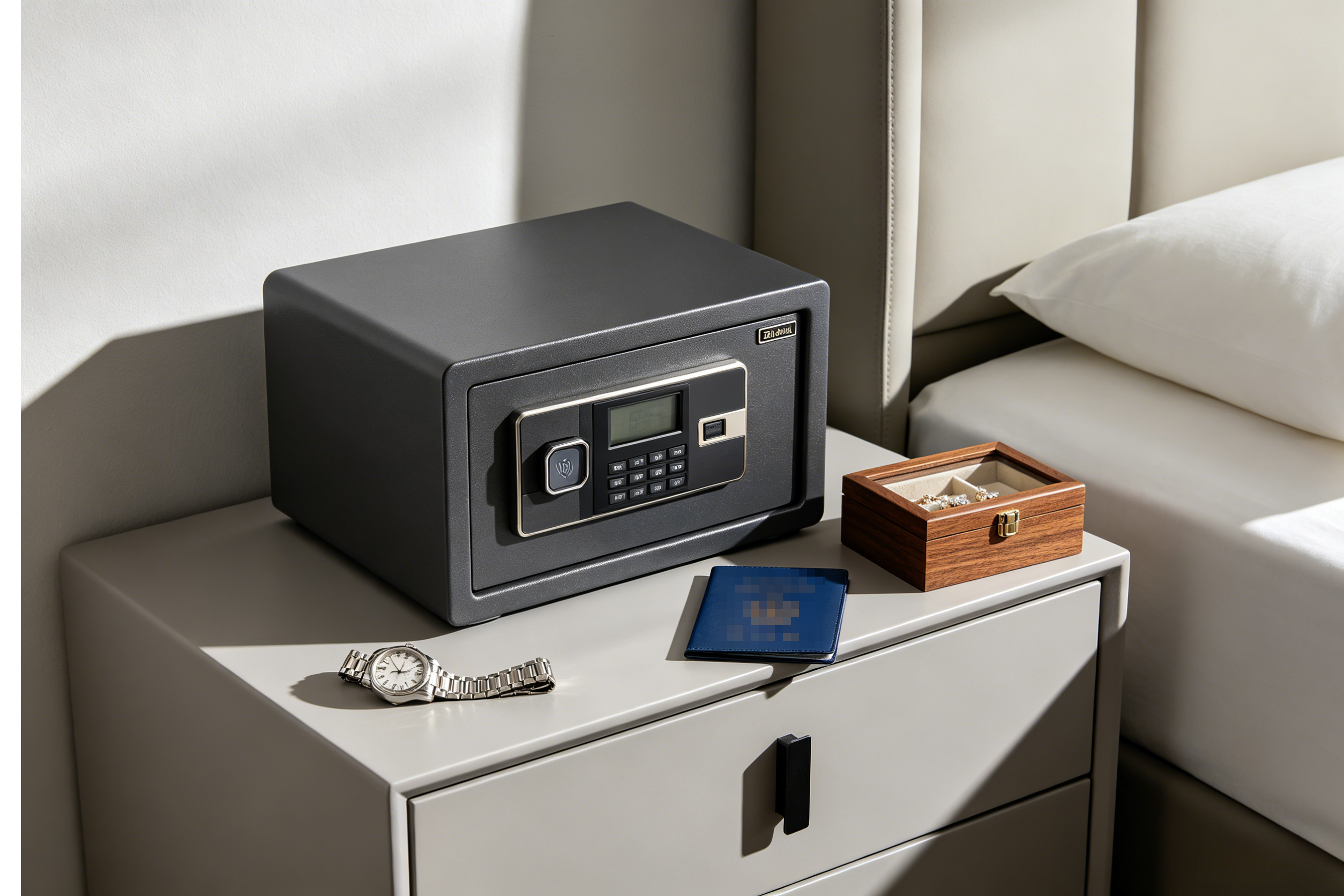
For many households, valuables are often stored in places that feel convenient but are not truly secure: bedroom drawers, closet shelves, nightstands, office cabinets, or jewelry boxes. These spots may work for daily organization, but they are not designed to protect passports, cash, jewelry, watches, personal documents, firearms, or family keepsakes from theft, fire, moisture, or unauthorized access.
That is where fingerprint safes come in.
A fingerprint safe, also called a biometric safe, is designed to give you fast and controlled access to your valuables without relying only on a key or a passcode. Instead of searching for keys or typing a code every time, you can open the safe with a registered fingerprint.
So, are fingerprint safes worth it?
For many homeowners, renters, families, jewelry owners, and gun owners, the answer is yes. A fingerprint safe is worth it when you want secure storage that is also easy enough to use every day. It is especially useful for items you need to access regularly, such as jewelry, watches, passports, cash, personal documents, emergency items, or legally owned firearms.
However, not all fingerprint safes are the same. A good fingerprint safe should offer more than just biometric access. It should also include strong steel construction, backup keys, emergency power options, an alarm system, and the right interior layout for what you plan to store.
In this guide, we will explain what fingerprint safes are, why they make sense for homes, what you can store inside them, and how to choose the best fingerprint safe for your needs.
What Is a Fingerprint Safe?

A fingerprint safe is a security safe that uses biometric fingerprint recognition as one of its unlocking methods. Once your fingerprint is registered, you can unlock the safe by placing your finger on the sensor.
This type of safe is often searched as:
- fingerprint safe
- fingerprint safes
- biometric safe
- biometric safes
- fingerprint safe for home
- home safe with fingerprint lock
- fingerprint jewelry safe
- biometric gun safe
The biggest advantage of a fingerprint safe is convenience. You do not need to remember a code every time, and you do not need to keep a key nearby for daily access. This makes biometric safes especially useful for bedroom storage, jewelry storage, home office use, and quick-access personal protection.
A modern fingerprint safe may also include other unlocking methods, such as a digital keypad, emergency key, Bluetooth access, or USB emergency power. For example, VALINIRT smart jewelry safes combine fingerprint access with backup entry features, giving users both convenience and peace of mind.
If you are looking for a safe for everyday valuables, you can explore VALINIRT’s Home Safes with Keypad & Fingerprint collection.
Why Fingerprint Safes Make Sense for Homes

The way people use safes in the United States is different from simply “locking away money.” Many American households need a safe for several real-life situations: protecting family documents, organizing jewelry, storing emergency cash, securing firearms, keeping valuables away from children, or protecting personal items in a shared home.
A fingerprint safe fits these needs because it combines security with daily usability.
1. Homes Often Have Multiple Storage Areas
Many families keep documents in a home office, jewelry in the bedroom, watches in a drawer, firearms in a closet, and spare cash somewhere else in the house. The problem is that scattered storage makes valuables easier to misplace and harder to protect.
A fingerprint home safe helps bring important items into one secure location. Instead of leaving valuables in different rooms, you can store them in a bedroom safe, closet safe, or home office safe that is easy for you to access but difficult for others to open.
2. Home Security Is Also About Privacy
Not every safety concern is about burglary. Sometimes, the issue is privacy and controlled access.
A safe for home use can help protect valuables from guests, roommates, service workers, babysitters, or even children who may open drawers out of curiosity. For renters, apartment owners, and shared households, a compact fingerprint safe can provide a practical layer of personal security.
3. Many Households Need Emergency Readiness
American homeowners often prepare for emergencies by keeping important items together, such as passports, insurance papers, medical records, cash, backup keys, and USB drives. A fireproof home safe or a home safe with a fireproof bag can help keep these items organized and easier to grab or access when needed.
If your main concern is documents, cash, and family records, a fireproof home safe may be a better choice than a basic lockbox.
4. Jewelry and Watches Need More Than a Regular Jewelry Box
A traditional jewelry box may look nice, but it usually does not provide serious protection. Rings, necklaces, watches, earrings, and heirloom pieces deserve better than an unlocked drawer or a decorative box on a dresser.
A fingerprint jewelry safe gives you quick access while keeping your jewelry more secure. This is especially useful for people who wear jewelry daily but do not want to leave expensive pieces exposed.
For jewelry storage, VALINIRT offers smart jewelry safe boxes designed for bedrooms, closets, and dressing areas.
5. Gun Owners Need Responsible Storage
For households with firearms, secure storage is not just about protecting property. It is also about responsibility.
A biometric gun safe or fireproof gun safe can help keep firearms away from children, guests, and unauthorized users while still allowing the owner to access the safe when needed. For larger firearm storage, a safe should also consider rifle capacity, pistol storage, ammunition space, fire protection, alarm features, and heavy-duty construction.
VALINIRT’s 24 Gun Fireproof Waterproof Gun Safe with Biometric Lock is designed for rifle, pistol, ammunition, and home security storage.
Fingerprint Safe vs. Keypad Safe: Which Is Better?

A common question is whether a fingerprint safe is better than a keypad safe.
The answer depends on how you plan to use the safe.
A keypad safe is simple and familiar. It works well for people who do not need to open the safe often. For example, if you mainly store long-term documents, tax records, backup cash, or rarely used items, a keypad safe may be enough.
A fingerprint safe is better for daily or frequent access. If you open the safe often to take out jewelry, watches, passports, keys, cash, or personal items, fingerprint access is faster and more convenient.
The best choice is often not fingerprint only. A better home safe usually includes multiple access methods:
- fingerprint access
- digital keypad
- backup keys
- emergency power support
This gives you convenience without depending on only one unlocking method. For example, if the battery runs low or your fingerprint is not recognized, backup access can help you open the safe without stress.
That is why many VALINIRT safes are designed with multiple access options, including fingerprint lock, keypad entry, hidden keyhole, USB emergency power, or backup keys depending on the model.
What Should You Store in a Fingerprint Safe?
A fingerprint safe is useful because it is secure enough for valuables but convenient enough for daily life. Here are some of the best items to store inside.
1. Jewelry and Watches

Jewelry is one of the most common reasons people buy a fingerprint safe.
A regular jewelry box may help with organization, but it is not designed for security. A small jewelry safe offers a better solution for rings, necklaces, earrings, bracelets, watches, heirloom pieces, and small collectibles.
A fingerprint jewelry safe is especially useful if you wear your jewelry often. Instead of unlocking a traditional safe with a key or entering a code each time, you can open the safe quickly with your fingerprint.
Good jewelry safe keywords include:
- jewelry safe
- fingerprint jewelry safe
- small jewelry safe
- jewelry box safe
- watch safe for home
- safe for jewelry and watches
For elegant daily jewelry storage, VALINIRT’s 0.6 Cu Ft Jewelry Safe with Fingerprint Morse Lock is designed with biometric fingerprint access, hidden keyhole backup, USB emergency power, and a leather-wrapped steel body.
For users who want a more modern experience, the 1 Drawer Jewelry Safe with Fingerprint Bluetooth Lock offers fingerprint access, Bluetooth access, auto-open drawer convenience, and customizable interior dividers for rings, watches, earrings, and accessories.
2. Passports, IDs, and Family Documents
Important documents are often difficult or time-consuming to replace. A fingerprint safe for home can help protect and organize:
- passports
- birth certificates
- marriage certificates
- property documents
- vehicle titles
- insurance papers
- tax records
- medical records
- legal documents
- emergency contact information
If documents are your main concern, you should consider more than just fingerprint access. Fire protection also matters.
A fingerprint lock helps you open the safe quickly. A fireproof document safe or fireproof home safe helps protect what is inside during emergencies. For this reason, many households prefer a home safe with a fireproof bag or a larger fireproof security safe for documents, cash, and family records.
If you need storage for documents and valuables, VALINIRT’s Home Safe Collection includes fingerprint home safes with fireproof bags, alarm features, shelves, and heavy-duty steel bodies.
3. Cash, Backup Cards, and Emergency Items

Many households keep a small amount of emergency cash at home. Others keep spare cards, backup keys, small hard drives, or emergency contact notes.
A fingerprint safe gives these items a dedicated place. Instead of hiding cash in a drawer or placing backup cards in a desk, you can keep them in a secure home safe that is easy for you to access.
This is especially useful for:
- families
- renters
- apartment residents
- home office workers
- small business owners
- people who travel often
- households with children
A compact fingerprint safe can work well as a bedroom safe, closet safe, or home office safe.
4. Firearms and Ammunition
For gun owners, safe storage is essential.
A biometric gun safe can help limit access to firearms while allowing the authorized user to unlock the safe quickly. This is especially important in homes with children, guests, or shared living spaces.
When choosing a fingerprint gun safe or fireproof gun safe, look for:
- biometric access
- keypad and key backup
- heavy-duty steel construction
- anti-theft alarm
- fire and water protection
- adjustable shelves
- space for rifles, pistols, and ammunition
- secure internal organization
If you need larger firearm storage, VALINIRT’s 24 Gun Fireproof Waterproof Gun Safe is designed with biometric fingerprint access, fire and water protection, alarm security, and storage space for rifles, pistols, and ammunition.
5. Everyday Valuables
Not everything inside a safe has to be expensive. Some items are valuable because they are personal, private, or difficult to replace.
A home safe with fingerprint lock can be used for:
- family keepsakes
- backup keys
- small electronics
- external hard drives
- camera memory cards
- prescription information
- business checks
- private letters
- collectible coins
- small heirlooms
This is where fingerprint safes are especially useful. If the safe is easy to open, you are more likely to use it every day. A safe that is too inconvenient often ends up ignored.
When Is a Fingerprint Safe Worth It?
A fingerprint safe is worth it if you want security without making daily access difficult.
It is especially worth it if:
- you open your safe often
- you store jewelry or watches at home
- you want a secure place for passports and documents
- you keep emergency cash or backup cards
- you live with children, roommates, or guests
- you want a bedroom safe or closet safe
- you need quick access without remembering a code
- you want a modern safe that fits your home design
- you need responsible firearm storage
- you want a better alternative to a drawer, closet, or jewelry box
For many people, the biggest benefit is habit. A fingerprint safe makes secure storage easy enough to become part of your routine. You come home, place your watch, ring, passport, or cash inside, and lock it away in seconds.
When a Fingerprint Safe May Not Be Enough
Fingerprint access is convenient, but it should not be the only feature you consider.
The fingerprint sensor is just one part of the safe. The overall security depends on the safe’s materials, lock design, alarm system, construction, weight, placement, and backup access.
Before buying a fingerprint safe, also check for:
- reinforced steel body
- pry-resistant door
- solid locking bolts
- backup key access
- emergency power support
- wrong-code lockout
- alarm system
- fireproof or water-resistant protection
- removable shelves or dividers
- soft interior lining for jewelry
- suitable size and weight
In simple terms:
The fingerprint sensor makes the safe easier to open for you. The safe’s construction makes it harder to open for everyone else.
That is why a good biometric safe should combine convenience with real physical protection.
What to Look for Before Buying a Fingerprint Safe
Choosing the right fingerprint safe depends on what you want to protect. Here are the key features to consider.
1. Multiple Unlocking Methods
Look for a fingerprint safe with backup access. A biometric lock is convenient, but you should still have another way to open the safe.
The best options may include:
- fingerprint access
- digital code
- backup key
- USB emergency power
- Bluetooth access, depending on the model
This is useful if the battery runs low, your finger is wet, or the fingerprint sensor fails to read correctly.
2. Fireproof or Fire-Resistant Protection
If you plan to store passports, titles, insurance records, tax documents, cash, or family papers, consider a fireproof home safe or a fireproof document safe.
A fingerprint lock helps with access. Fire protection helps with disaster readiness.
For document-heavy storage, explore VALINIRT’s Fireproof Safe Collection.
3. Alarm and Anti-Tamper Features
A good security safe for home should help discourage unauthorized access.
Useful features include:
- alarm system
- wrong-code lockout
- vibration alert
- anti-pry construction
- reinforced locking bolts
- silent mode for discreet access
These features are especially important for larger home safes, fireproof gun safes, and safes used in garages, closets, or home offices.
4. Interior Layout
A safe should not only be secure. It should also be easy to organize.
Different items need different layouts:
- jewelry needs soft lining and dividers
- watches need separate compartments
- documents need flat storage space
- cash and cards need small sections
- firearms need adjustable shelves or racks
- electronics need enough depth and width
If you are buying a jewelry safe, look for a soft interior, removable dividers, and a design that protects against scratches. If you are buying a home safe, look for shelves, drawers, and enough room for documents or valuables.
5. Size and Placement
The best safe is the one that fits your space and your lifestyle.
For a bedroom or dressing area, a small jewelry safe may be enough. For a home office, you may need a larger document safe. For firearms, you may need a fireproof gun safe with more vertical space and adjustable storage.
Common placements include:
- bedroom
- closet
- dressing table
- home office
- basement
- garage
- walk-in closet
- small business office
Before buying, measure your available space and consider what you may need to store in the future, not just what you own today.
Best Uses for Fingerprint Safes by Home Scenario
Apartment or Condo
For apartments and condos, space is often limited. A compact fingerprint safe can protect passports, cash, jewelry, backup cards, and personal documents without taking up much room.
Best keywords for this use case:
- small safe for home
- compact fingerprint safe
- safe for renters
- bedroom safe
- closet safe
Family Home
For families, a fingerprint safe can help protect valuables while keeping sensitive items away from children.
Good items to store include:
- family documents
- insurance papers
- cash
- jewelry
- watches
- spare keys
- emergency items
- personal records
A larger home safe or fireproof home safe may be better for families with more documents and valuables.
Home Office
Many people now work from home or manage personal finances from a home office. A home office safe can protect contracts, tax documents, hard drives, checks, small electronics, and business records.
A fingerprint safe is useful here because it provides quick access without leaving sensitive materials in a desk drawer.
Gun Owner Household
For gun owners, a biometric gun safe or fireproof gun safe can support responsible storage. It can help prevent unauthorized access while keeping firearms, ammunition, and related items organized.
A larger gun safe should include strong construction, alarm features, reliable backup access, and enough room for rifles, pistols, and accessories.
Jewelry and Watch Owners
For jewelry and watch owners, a fingerprint jewelry safe is one of the most practical upgrades from a traditional jewelry box.
It protects valuables while keeping them easy to access during daily routines. It also looks more suitable for bedrooms, closets, and dressing areas than a bulky metal safe.
Explore VALINIRT’s Jewelry Safe Collection for smart fingerprint jewelry safes designed for modern homes.
Are Fingerprint Safes Safe?
Yes, fingerprint safes can be safe when they are built with strong materials and proper backup security features.
A fingerprint lock is an access method. It does not replace the need for solid construction. The safest fingerprint safes combine biometric access with a reinforced body, secure lock system, backup key, emergency power support, and anti-tamper design.
A good fingerprint safe should not make security complicated. It should make secure habits easier.
The goal is simple: make it easy for you to access your valuables, and difficult for unauthorized users to reach them.
Final Verdict: Are Fingerprint Safes Worth It?

Yes, fingerprint safes are worth it for many homes, especially if you want a safe that is secure, convenient, and easy to use every day.
A fingerprint safe is a smart choice if you need to protect:
- jewelry
- watches
- passports
- personal documents
- cash
- backup cards
- emergency items
- firearms
- business records
- family keepsakes
- everyday valuables
For the best protection, choose a fingerprint safe with multiple access methods, strong steel construction, backup keys, emergency power support, alarm features, and an interior layout that matches your storage needs.
If you need a compact safe for jewelry and watches, consider a fingerprint jewelry safe. If you need a larger safe for documents, cash, and home valuables, explore VALINIRT’s home safes with keypad and fingerprint access. If you need serious storage for firearms and ammunition, a fireproof gun safe may be the right choice.
A good safe should not just protect what you own. It should help you build better security habits at home.
With the right fingerprint safe, protecting your valuables becomes something you can do every day — quickly, securely, and confidently.
Share:
Why 4 Out of 5 Home Safes Failed Our Fire Test | VALINIRT
Fireproof Gun Safe Buying Guide: How to Choose the Right Safe for Rifles, Pistols & Ammo