
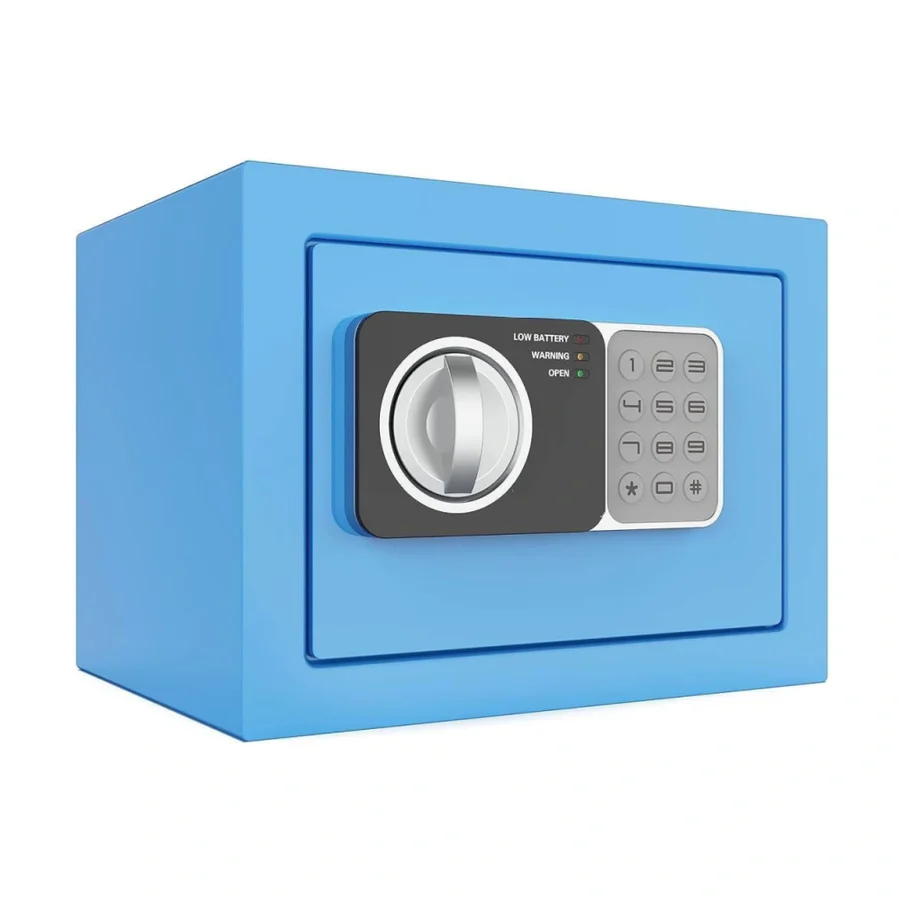

A lot of individuals buy a home safe and then forget about it. They feel fine knowing that their passport and some cash are "safe" in the corner of a closet, beneath several jackets. That feeling is the problem.
Because we put five of the most popular home safes through a controlled fire exposure test at 1,200°F for 30 minutes, and only one came out with everything inside still intact. Not two. Not three. One. This is what happened, what we found out, and what it implications for anyone looking for a safe right now.
The Setup: What We Actually Tested
We chose five home safes in varied price ranges and sizes, from little 0.23 Cu Ft digital lock boxes to medium-sized 1.6 Cu Ft steel cabinets. We put the same four things inside each one: a USB drive, a laminated ID card, a piece of paper, and a tiny bit of cash. These are the things that most people really keep in their homes.
According to fire engineering literature, 1,200°F is a realistic temperature for a house fire. The test setting reached and stayed at this temperature. A typical house fire burns at a temperature between 900°F and 1,400°F, depending on how dense the materials are and how much air flows through them. Our test was squarely in the middle of that range.
We put each safe through a 30-minute exposure window, then let them cool down before opening.
What "Fireproof" Actually Means
Before we talk about the outcomes, there's something we need to clear up. Most people think that the word "fireproof" on a product label indicates that it won't catch fire. At about 350°F, paper starts to burn, and at about 451°F, it catches fire. That's a fact from material science. So, while a safe says it can withstand 1,200°F fires, it doesn't mean the outside won't become hot. It means that the temperature inside must be below a certain level for your things to stay safe.
This difference is quite important. A safe with thin steel walls and no thermal insulation layer might be able to handle flames on the outside for a time, but the temperature inside climbs quickly, and once it hits 451°F, your documents are gone, no matter how the lock looks after that.
According to UL 72, the standard system for classifying fire-resistant record protection equipment, a safe must keep its inside temperature below 350°F for the whole rated fire duration in order to be considered safe. That is the standard that really counts. Most affordable safes don't even have a UL 72 rating. They only say "fireproof" in their ads without any proof from a third party.
We learned this the hard way throughout the test.
The Results: Where Four of Them Failed

In the first 20 minutes, three of the five safes broke. The outside shells stayed the same form, while the temperatures within rose above 400°F between the 12 and 18-minute markers. The paper documents were burnt and damaged in some places. After the test, two of them had USB drives that didn't work.
A fourth safe made it to the entire 30 minutes, but just barely. The internal temperature reached 389°F, which left the paper documents intact but yellowed and brittle at the edges. Is it usable? Maybe. Is it reliable? That's a long way to go.
The fifth safe, which was a 1.6 Cu Ft steel cabinet with a confirmed fireproof document bag inside, kept the temperature well below 350°F for the whole 30 minutes. The paper was clean. The USB drive worked. The money was absolutely safe.
That one was a VALINIRT unit.
Why VALINIRT Held Up When the Others Didn't
First, building the walls. Heavy-duty thicker steel plates and an interior thermal barrier layer make up VALINIRT's fireproof line. Thin-walled safes let heat from outside go straight inside. The thermal barrier slows down that transmission a lot, giving the inside the time it needs.
Second, the door seal's strength. The door is the weakest part of any safe when there is a fire. When metal becomes hot, it expands. If the door seal isn't made to account for that, gaps occur and hot air comes in. The anti-pry door design from VALINIRT has a compression fit that gets tighter when it gets hot instead of looser.
Third, the document bag that is fireproof. People typically think of this as a marketing add-on, but it actually serves as a second layer of thermal protection for the most important things within. The bag adds an extra layer of protection, even if the safe's inside gets warm. The VALINIRT 1.6 Cu Ft Fireproof Home Safe with Digital Keypad & Alarm ($155) and the 2.3 Cu Ft Fireproof Home Safe with Electronic Keypad & Alarm ($177) both come with this as a regular feature, not an upgrade.
What This Means If You're Shopping Right Now

The uncomfortable truth is that pricing alone doesn't tell you how well a fire will work. Two of the safes that didn't work in our test were mid-range devices that cost between $80 and $120. The fireproof line from VALINIRT starts at $99 for the safe that passed.
Money isn't always the only thing that matters. It's a priority for construction. Some companies use the budget for the lock mechanism or the outside finish. When fire is the real hazard, VALINIRT's fireproof models put the most emphasis on the thermal protective layer and door seal.
When you store important things like documents, hard drives, passports, or anything else that can't be replaced, the price isn't the most important item to check for. It's keeping the inside temperature stable even when it's hot. Check to see if the safe contains a document bag that is rated to be fireproof.
In the product description, look for "thermal barrier construction." If a safe only claims "fireproof" without giving a temperature rating or a tested duration, that's a sign that something is wrong.
Conclusion
Four out of five safes didn't work. That's not a scare technique; that's what happened in a controlled test at a temperature that would happen in a real fire in a home. The failures all had thin walls, no proven thermal barrier, and door seals that weren't made to handle heat expansion.
The structural details are more important than the marketing label if you want a safe that works. The fireproof range of VALINIRT cabinets goes from small 1.6 Cu Ft units to big 15.6 Cu Ft cabinets that can withstand temperatures of 1,400°F for 45 minutes. This is because of how they are made, not because of the label.
Ready to protect what matters? Browse the full VALINIRT fireproof safe collection at Valinirt, all products come with a 2-year warranty and free shipping across the contiguous US.
Share:
Stylish Home Safes: Where Security Meets Interior Design
Are Fingerprint Safes Worth It for Home Use?